Best pogo stick for kids | Ultimate guide September 2026
The Ultimate 2026 Guide to the best pogo sticks for kids: Top-Rated Picks, Expert Reviews & Buyer’s Blueprint
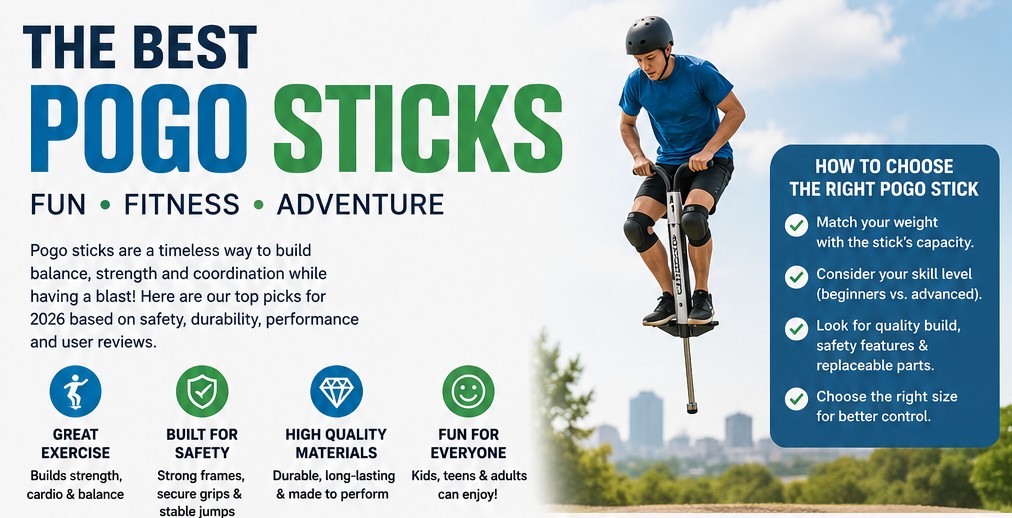
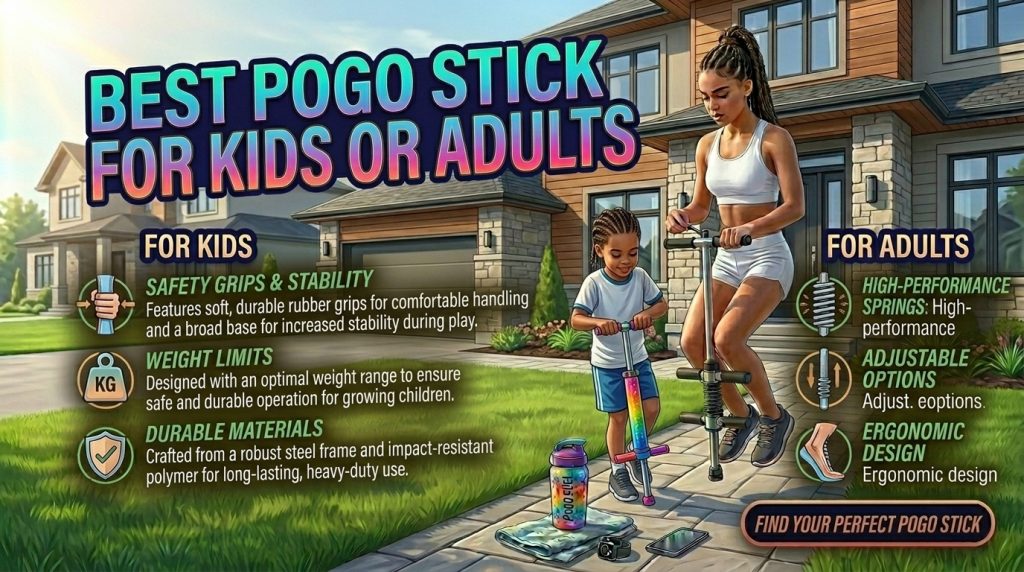
Whether you’re looking for a classic spring-loaded pogo stick for backyard entertainment or a high-performance, air-powered model built for advanced tricks and jumps exceeding 10 feet, selecting the right pogo stick comes down to several key factors, including engineering quality, safety features, durability, and compatibility with the user’s weight range.
Over the years, the global outdoor toy and action-sports market has evolved significantly. From the bustling sidewalks of New York to the spacious suburban communities of Texas and the sun-filled parks of Miami, Florida, pogo sticking has transformed from a nostalgic childhood activity into an engaging form of fitness, recreation, and even extreme sports.
Pogo sticks have evolved from simple childhood toys into serious fitness tools, trick machines, and family entertainment staples. Whether you’re searching for the best pogo stick for your energetic kids in a suburban Texas backyard, a durable adult model for fitness routines in New York City apartments, or a high-performance stick for extreme bouncing sessions on Miami beaches or San Francisco hills, this comprehensive 2026 guide has you covered.
As America’s go-to resource at bestpogostick.com, we’ve tested dozens of models, analyzed thousands of user reviews, and consulted experts to bring you the definitive roundup. This guide covers history, benefits, types, top recommendations by category and region, buying tips, safety protocols, maintenance, workouts, and more. Let’s bounce into the details.
A Brief History of the Pogo Stick
The pogo stick dates back to the early 20th century. George B. Hansburg patented an early version in 1919, inspired by a story from a Burmese girl named Pogo. The classic spring-loaded design became a cultural icon in the 1970s and 80s. Today, modern versions use advanced materials like aircraft-grade aluminum, air pistons (Vurtego), and high-density foam for safety and performance. Brands like Flybar (successor to classic lines) and Vurtego dominate the market with innovations that support everything from toddler fun to world-record jumps.
Kids Health Benefits of Pogo Sticking: Why It’s More Than Just Fun
Pogo sticking is an excellent full-body workout. It improves:
Cardiovascular Fitness: Elevates heart rate like jogging but with lower joint impact.
Balance & Coordination: Engages core, legs, and proprioception.
Leg & Core Strength: Repeated jumping builds powerful calves, quads, and abs.
Bone Density: Weight-bearing activity supports stronger bones.
Mental Health: Outdoor play reduces stress and boosts mood through endorphins.
Motor Skills in Kids: Enhances hand-eye coordination and confidence.
Studies and therapists note its value for occupational therapy, especially for children developing balance. Adults use it for fun cross-training or low-impact cardio.
Types of best pogo stick for kids: Finding the Right Category
1. Foam Pogo Sticks (Beginner/Kids): Soft foam padding for safety. Best pogo stick for ages 3–9. 2. Spring-Loaded Traditional: Classic metal spring for reliable bounce. 3. Air-Powered (Pneumatic): Adjustable resistance via air pressure (Vurtego excels here). 4. Extreme/Pro Models: High-weight capacity and height potential for tricks. 5. Folding/Portable: Great for travel or small spaces in New York or San Francisco apartments.
This comprehensive, data-driven guide analyzes the absolute best pogo sticks on the market today. It breaks down technical metrics, ranks the top models across distinct categories (toddlers, kids, teens, and adults), and examines regional buying preferences across key US markets including Washington, San Francisco, and beyond.
The Top Picks: Summary Comparison of some top rated best pogo sticks for kids
The following data table outlines the market leaders across all categories based on weight compliance, mechanism type, and primary user demographic.
Model
Category
Weight Range
Mechanism Type
Best For
Flybar My First Foam Jumper
Toddlers (Ages 3+)
Up to 250 lbs
Bungee / Foam Block
Indoor Learning & Motor Skills
Flybar Foam Maverick 2.0
Young Kids (Ages 5-9)
40 – 80 lbs
Enclosed Steel Spring
First-time Spring Beginners
Geospace Jumparoo Boing!
Older Kids (Ages 6+)
60 – 100 lbs
Industrial Coiled Spring
Stability & Continuous Cardio
Flybar Foam Master
Teens & Tweens (Ages 9+)
80 – 160 lbs
Heavy-Duty Steel Spring
Progression & Neighborhood Cruising
Flybar Velocity Pro (Medium)
Advanced Teens / Adults
80 – 160 lbs
Bat-Wing Thruster Spring
Technical Tricks & Street Pogoing
Vurtego V4 Pro
Extreme Adults (Ages 14+)
100 – 300+ lbs
Adjustable Air Pneumatics
Extreme Big Air (Up to 10ft+)
Detailed Reviews: The best pogo sticks for kids on the Market
The Flybar My First Foam Jumper is an ingenious re-imagining of the classic pogo stick, specifically optimized for early childhood development. Designed to replace screen time with active physical engagement, this model utilizes a high-density, floor-safe foam block connected to stretchable bungee cords rather than a traditional rigid steel shaft and piston.
Engineering & Ergonomics
The foundational component is a thick, durable block of closed-cell foam that acts as both the foot platform and the contact pad. Because it contains no exposed metal or sharp edges, it is 100% indoor-safe and will not scratch hardwood floors or tear carpets. The handle is wrapped in soft, sweat-resistant foam, connected via a heavy-duty elastic bungee system that automatically adjusts to the height of the child as they pull upward.
Performance Analysis of the best pogo sticks for kids
Every time the child jumps, a built-in mechanical squeaker hidden within the foam base activates. This provides immediate auditory feedback, which plays a massive role in pediatric motor-skill development by encouraging repetitive rhythmic jumping. It focuses heavily on building core stability, vestibular balance, and bilateral coordination without the risk of tipping over associated with traditional vertical pistons.
Pros: Ultra-safe; zero risk of pinching; high weight threshold (can technically hold up to 250 lbs, allowing parents to demonstrate); incredible tool for sensory processing coordination.
Cons: Does not provide vertical elevation like a mechanical spring; acoustic squeaker can be loud during continuous indoor use.
Best For: Young Kids & Spring Beginners (Ages 5-9 | 40 – 80 lbs)
The Flybar Foam Maverick 2.0 is the definitive entry point for children graduating to a true mechanical spring-piston design. Flybar, the original innovator of the pogo stick since 1920, engineered the Maverick to balance beginner-friendly forgiveness with highly durable construction.
Structural Integrity & Safety features
The core frame is composed of a rigid, lightweight aluminum alloy that allows younger children to maneuver and steer the stick without experiencing structural fatigue. Safety is paramount here: the entire central spring assembly is fully enclosed within a protective textured housing. This prevents any possibility of fingers, clothing, or skin getting pinched by the metal coils during deep compression cycles.
Ergonomics & Contact Points
The Maverick 2.0 features ultra-wide, non-slip footpegs that are welded directly to the frame structure to eliminate flexing. The handlebar features a fully wrapped, high-friction foam grip that ensures a firm hold even if hands get sweaty under the summer sun. The bottom tip is outfitted with a wide, non-marking rubber stance pad that provides excellent traction on concrete and asphalt.
Weight Optimization: It requires a minimum of 40 pounds of downward force to safely actuate the spring. If a child weighs less than 40 pounds, the stick will feel completely rigid, leading to tip-overs.
Pros: Exceptionally durable frame; fully enclosed spring housing prevents injuries; lightweight enough for kids to transport independently.
Cons: Strictly capped at 80 lbs; older or heavier children will rapidly bottom out the spring, causing high-impact jars to their knees.
Best For: Stability, Balance, and Consistent Cardio (Ages 6+ | 60 – 100 lbs)
The Geospace Jumparoo Boing! stands out due to its unique architectural layout, specifically its distinct Y-shaped split handlebar design. While most pogo sticks feature a standard straight T-bar handle, Geospace utilizes a curved, ergonomic architecture that opens up the upper body posture, offering a completely different steering dynamic.
Ditch the screen time and elevate outdoor play into an exhilarating full-body workout with the Geospace Jumparoo Boing! MAX Pogo Stick. Specifically engineered for older kids, teens, and lightweight adults weighing between 90 to 160 pounds, this premium pogo stick is calibrated for maximum vertical rebound, core stability, and agility training.
At bestpogostick.com, we review gear built to handle real-world conditions. Whether you are bouncing on the sun-baked driveways of Texas, navigating cracked concrete sidewalks in New York, cruising suburban neighborhoods in California, or riding on the damp cul-de-sacs of Washington, the Jumparoo Boing! MAX delivers an exceptionally smooth, high-flying bounce with top-tier safety integration.
Key Product Highlights & Engineering Features
All-New Mechanical Safety Design: The Jumparoo MAX features an ultra-durable steel spring system that is fully enclosed within a sleek metal housing. This encased spring configuration keeps clothes and fingers completely safe from pinches while showing off a premium high-gloss paint finish and vibrant decals.
Rugged Non-Slip Grip Tape Foot Pegs: Say goodbye to flimsy plastic or slick rubber footpads. The MAX is outfitted with industrial-grade, texturized non-slip grip tape directly on the metal foot pegs. This ensures your sneakers maintain a locked-in, secure hold in any environment—even during high-altitude jumps or when handling light outdoor moisture.
Ergonomic Y-Shaped Foam Handlebar: Designed with a unique Y-shaped architecture, this steering crossbar provides riders with more hand-placement options for superior control, balance, and trick maneuvering. The entire handlebar is wrapped in thick, premium comfort foam to prevent painful friction blisters during hours of consecutive play.
True Tween, Teen, and Adult Versatility: Calibrated heavily for riders up to 160 pounds, this is a versatile fitness stick that can be enjoyed by active teens and parents alike. It provides excellent vertical stabilization, helping users build leg muscle, strengthen their core, and burn energy while having an awesome time outdoors.
Heavy-Duty Pro-Level Specs: Standing at an impressive 44 inches tall, the MAX features wide 4-inch metal foot pegs to accommodate growing sneaker sizes comfortably. The bottom is finished with a wide, industrial-grade solid rubber bounce tip designed to absorb heavy impacts while delivering a highly responsive, consistent bounce profile.
Technical Specifications Matrix
Feature
Specification Details
Target Rider Profile
Older Kids, Tweens, Teens, and Lightweight Adults
Supported Weight Range
90 lbs to 160 lbs ($90\text{ lbs} \text{ to } 160\text{ lbs}$)
Total Structural Height
44 Inches ($44\text{“}$)
Foot Peg Dimensions
4-Inch Width with Non-Slip Grip Tape Surface
Handlebar Interface
Foam-Wrapped Ergonomic Y-Shape Control Bar
Safety Mechanisms
Fully Encased Hidden Internal Spring & Industrial Rubber Base Tip
Engineered to Last Across Varied US Environments
Texas & California: The high-gloss protective paint and UV-stabilized handlebar foam resist fading, cracking, or becoming sticky even after long summer afternoons under intense southern sunlight.
New York & Washington: The high-traction grip tape on the foot pegs and the rugged rubber base tip keep their reliable grip and resist slipping, even when tackling cold pavements or navigating slightly damp coastal morning mist.
Mechanical Advantage & Spring Calibration
The Jumparoo Boing! features a heavy-duty industrial coiled steel spring that is precision-tuned for the 60 to 100-pound weight bracket. The spring rate is highly linear, meaning it offers predictable resistance through the entire depth of the jump stroke. This predictable compression allows children to establish a rhythmic, high-frequency bounce pattern, making it one of the absolute best options for cardiovascular exercise.
Enhanced Steering Stability
The split-handlebar design places the hands wider apart than a conventional T-bar. This increased width drastically improves lateral leverage, making it much easier for the rider to correct their balance mid-air or execute controlled banking turns on open pavement. The footplates feature an aggressive, molded high-traction texture that locks shoe soles in place.
Pros: Ergonomic Y-handlebar provides superior steering leverage; glossy, rust-resistant finish; exceptional durability under rapid, continuous jumping.
Cons: The wider handle footprint makes it slightly bulkier to store or pack into a vehicle trunk for trips to the park.
Best For: Tweens, Teens, and Intermediate Riders (Ages 9+ | 80 – 160 lbs)
The Flybar Foam Master is arguably the most recognizable and widely deployed mid-tier pogo stick in the United States. Built as a direct step-up from the Maverick, it is specifically scaled up in frame height, handle width, and spring resistance to support older children, teenagers, and smaller adults.
Heavy-Duty Architecture
To comfortably handle loads up to 160 pounds, the Master utilizes a reinforced steel frame structure. The lower section of the piston shaft is chrome-plated to reduce friction against the inner bushings, ensuring a smooth, fluid stroke. The entire frame is enveloped in a thick, impact-absorbing foam protective layer, which safeguards both the rider’s legs from bruising and the stick itself from scuffs during drops.
Footpeg Engineering & Physics
The Master features oversized, heavy-duty footplates with a deep cross-hatched pattern. These plates are set at a slight angle relative to the frame, which aligns perfectly with natural human ankle articulation when standing upright. This subtle engineering choice shifts the rider’s center of gravity slightly forward, enhancing tracking stability and minimizing the tendency of the stick to drift backward during high jumps.
Pros: High weight capacity handles the rapid growth spurts of teenagers; foam-encased frame absorbs impacts; highly reliable, low-maintenance spring system.
Cons: At nearly 8 pounds, it can be heavy for 9-year-olds who are on the lower threshold of the weight limit.
Best For: Technical Street Tricks and Progression (Teens & Adults | 80 – 160 lbs)
For riders who view pogo sticking not just as a toy, but as an action sport akin to skateboarding or stunt scootering, the New Bounce Pogo Stick for Kids is the ultimate transitional platform. It bridges the gap between classic spring-based recreational sticks and professional extreme-air pneumatic machines.
Patented Bat-Wing Handlebar & Tech Features
The standout feature of the New Bounce Pogo Stick for Kids is its specialized Bat-Wing handlebar system. Unlike standard welded bars, this setup mimics the geometry of professional or trick scooter bars, providing maximum clear clearance for advanced leg maneuvers, cross-ups, and bar-spins. The handlebars are clamped to the stem via a heavy-duty collar system, allowing for minor adjustments.
Pro-Grade Suspension Mechanics
The inner workings feature an oil-infused, low-friction internal bushing assembly paired with a high-tensile alloy spring. This creates an incredibly crisp, fast rebound rate. The footpegs are completely unique: instead of fixed plastic plates, they are pro-grade, laser-cut, ultra-wide aluminum blocks that offer unparalleled surface area and absolute rigidity under high-impact landing forces.
Pros: The Pogo Sticks are made of top quality materials to ensure the utmost durability. The fun colors enhance the hours of possible fun. Grip Foam Handles And Frame – Added for your comfort and safety, the foam coating provides a great cushioned grip.
Cons: Not intended for beginners; the highly responsive spring can feel erratic to someone who hasn’t mastered baseline vertical balance.
Vurtego V4 Pro
Best For: Elite Extreme Athletes and Adult Professionals (Ages 14+ | 100 – 300+ lbs)
The Vurtego V4 Pro is not a toy—it is a highly engineered, high-altitude extreme sports vehicle proudly manufactured in the USA. By abandoning traditional steel springs entirely and replacing them with a fully adjustable pneumatic air suspension cylinder, Vurtego completely revolutionized the sport, allowing athletes to clear heights of over 10 feet.
       [High-Pressure Air Valve] ─── Adjusts PSI for user weight/height
                 │
       [Aeronautical Aluminum] ─── Lightweight, ultra-strong cylinder
                 │
       [Pneumatic Air Chamber] ─── Compressed air stores kinetic energy
                 │
       [Self-Lubricating Piston] ── Gives frictionless, massive rebound
The Physics of Air Power
Traditional steel springs suffer from a fixed spring rate and physical material limitations; they can only store a finite amount of energy before bottoming out. The Vurtego V4 Pro utilizes compressed air as its spring medium. When you land, your weight forces a self-lubricating piston up into a sealed chamber of air, compressing it. Because air compresses exponentially, the energy storage capacity is vastly superior to steel.
Infinite Adjustability via PSI Tuning
The greatest advantage of the Vurtego V4 Pro is its universal accessibility via an ordinary bicycle shock pump. Why pogo stick workouts burn fat? By altering the internal air pressure (measured in PSI), you can change the stiffness of the pogo stick instantly:
Low PSI (e.g., 60-80 PSI): Calibrates the stick for a lighter rider or a casual, low-impact backyard fitness workout.
High PSI (e.g., 100-150+ PSI): Stiffens the cylinder to support riders up to 300+ pounds or primes the system for professional extreme athletes launching themselves over cars or onto rooftops.
Elite Materials & Craftsmanship
The entire outer cylinder is machined from aerospace-grade aluminum, polished to a flawless finish to reduce seal friction. The footpegs are grip-taped like a skateboard and integrated directly into the cylinder geometry for absolute structural strength. The bottom tip features a massive, shock-absorbing, high-traction urethane compound designed to bite safely into concrete at extreme angles.
Pros: Capable of generating 10+ feet of vertical air; infinitely adjustable to any weight up to 300+ lbs; incredibly smooth, frictionless stroke; rebuildable internal seals.
Cons: High premium price point; requires a shock pump to manage settings; too powerful and dangerous for young children.
Best Pogo Stick from customers rating
Technical Buyer’s Guide: Deep Dive Into Pogo Engineering
To choose the perfect pogo stick for your specific needs, you must look past bright graphics and branding and evaluate the core mechanical attributes that dictate performance, safety, and longevity.
1. Weight Calibration: The Non-Negotiable Metric
A pogo stick operates via stored kinetic energy. If your physical weight does not align with the internal resistance of the system, the stick will fail to perform safely.
Under-Weight Consequences: If a child weighing 50 pounds attempts to ride a stick rated for 80–160 pounds, their body mass will be completely insufficient to compress the high-tensile steel spring. The stick will act as a rigid, unyielding stilt. When they land, the impact energy will not be absorbed by the spring; instead, it will transfer directly up through their ankles, knees, and lower spine, causing immediate loss of balance and joint jarring.
Over-Weight Consequences: If a teenager weighing 170 pounds rides a stick maxed out at 100 pounds, they will easily compress the spring to its absolute limit on the very first bounce. This is known as bottoming out. When the coils slam flat against each other, the deceleration changes from fluid suspension into an instantaneous hard stop, which can fracture plastic footpegs, bend the internal piston, and cause severe wrist strain.
2. Spring-Driven vs. Air-Powered Systems
The core mechanism dictates how high you will go and how much maintenance the device requires.
┌───────────────────┬──────────────────────────────────────────┬──────────────────────────────────────────┐
│ Feature           │ Spring-Driven Pogo Sticks                │ Air-Powered (Pneumatic) Pogo Sticks      │
├───────────────────┼──────────────────────────────────────────┼──────────────────────────────────────────┤
│ Energy Storage    │ Physical compression of steel alloy      │ Compression of sealed atmospheric air    │
│ Max Elevation     │ Limited to 2 to 4 feet                   │ Capable of 10+ feet                      │
│ Weight Tuning     │ Fixed; must purchase a new model         │ Fluid; adjust via shock pump pressure    │
│ Lifespan          │ Coils degrade/sag over years of use      │ Long lasting; seals are easily replaced  │
│ Target Audience   │ Recreational, beginners, young children  │ Extreme athletes, adults, heavy fitness  │
└───────────────────┴──────────────────────────────────────────┴──────────────────────────────────────────┘
3. Contact Point Dynamics (Grips, Pegs, Tips)
Handlebar Interfaces: Look for closed-cell foam or textured kraton rubber grips. Foam is highly effective at dampening high-frequency vibrations from hard landings, preventing hand fatigue. Rubber grips with locked-on collars offer far better steering accuracy for advanced riders executing rotation tricks.
Footplate Engineering: The footplates must always feature raised traction ridges, molded metal teeth, or professional skateboard grip tape. If the surface is smooth plastic, a tiny amount of moisture from morning dew or damp sneakers can cause the foot to slip off mid-bounce, leading to a severe groin or shin injury against the central shaft.
The Rebound Tip: The rubber tip at the base of the piston is a critical wear item. Cheap tips use hard plastic-heavy compounds that slide easily on smooth surfaces. Premium models utilize thick, high-durability natural rubber or polyurethane tips with a wide, rounded profile. This rounded shape ensures that even if the pogo stick hits the ground at a 15-degree tilt, the full surface area of the tip maintains traction with the pavement.
Regional US Market Insights: Pogoing from Coast to Coast
At bestpogostick.com, we track consumer buying behavior and environmental factors across major metropolitan hubs to help riders choose the optimal gear for their local terrain and climate conditions.
New York & Washington (Northeast & Mid-Atlantic Urban Jungle)
The Environment: High-density concrete, asphalt sidewalks, public plazas (e.g., Union Square, National Mall), and historic brick-paved lanes. Space is often constrained to tight urban corridors or public parks.
Buying Trends: Riders in NYC and DC overwhelmingly favor intermediate trick sticks like the Flybar Velocity Pro or portable, lightweight kids’ models. Because storage space is limited in city apartments, large pneumatic cylinders are less common unless the rider is a dedicated extreme athlete.
Pro Tip for Northeast Riders: Pavement salt used during winter months is highly corrosive to steel springs. If you ride your pogo stick on urban sidewalks in NY or DC between December and March, ensure you wipe down the chrome piston shaft with a dry cloth after use to prevent rust pitting on the seals.
Texas (The Suburban Playground)
The Environment: Massive suburban developments, sprawling concrete driveways, flat cul-de-sacs, and expansive master-planned neighborhood parks in cities like Austin, Houston, and Dallas.
Buying Trends: Texas is a primary consumer market for heavy-duty family models like the Flybar Foam Master and the Geospace Jumparoo Boing!. With large multi-car driveways and ample garage storage space, families regularly purchase multiple sticks across different weight brackets to host neighborhood driveway sessions.
Climate Consideration: Intense Texas summer heat can cause the asphalt on neighborhood streets to soften slightly. Avoid pogoing on fresh, sun-baked asphalt, as the high concentration of pressure on the small rubber tip can leave deep indentations in your street and cause the tip to stick, breaking your rhythm.
Florida & Miami (High-Humidity Coastal Blast)
The Environment: Sun-drenched coastal boardwalks, skateparks, smooth concrete promenades, and highly humid seaside air.
Buying Trends: Extreme sports thrive in Miami, making it a hotspot for the elite Vurtego V4 Pro. Both adults looking for a high-intensity beach workout and action-sports athletes looking to perform aerial flips on smooth concrete surfaces gravitate toward pneumatic air power.
Corrosion Warning: Salt air from Miami Beach accelerates oxidation at an alarming rate. For Florida riders, storing your pogo stick inside a climate-controlled room rather than a humid garage or outdoor shed is crucial to preventing the internal metal springs or air valves from seizing up.
San Francisco (The Ultimate Elevation Challenge)
The Environment: Extreme geographic topography, dramatic inclines, structural retaining walls, and a culture centered deeply on avant-garde fitness and outdoor physical challenges.
Buying Trends: The technical terrain of San Francisco demands high-performance gear. Adult fitness enthusiasts use pogo sticks as an intense plyometric workout to complement trail running and hill climbing. The Vurtego V4 Pro is highly popular here among tech-sector professionals who utilize the adjustable air pressure to perform high-altitude drops off urban steps and ledges.
Health & Fitness Analytics: The Pogo Workout
Many view the pogo stick exclusively through the lens of recreation, but from a biomechanical perspective, continuous jumping is one of the most intense, efficient, and low-impact high-intensity interval training (HIIT) workouts available. How many calories do you burn pogo sticking?
Caloric Burn & Cardiorespiratory Load
According to sports medicine data, vigorous pogo sticking can burn between 600 and 800 calories per hour, easily rivaling high-pace rowing, swimming, or outdoor cycling. Because it forces the cardiovascular system to continuously pump oxygenated blood to both the upper and lower muscle groups simultaneously, it spikes the heart rate into the fat-burning zone within less than three minutes of continuous activity.
Kinetic Shock Absorption
Unlike outdoor running, where your feet repeatedly slam into unyielding concrete—sending high-impact shockwaves directly into your knee cartilage and lumbar vertebrae—a properly calibrated pogo stick converts that downward impact force into potential energy stored within a mechanical spring or compressed air chamber. This means you can achieve an incredible plyometric workout with a fraction of the joint stress typically associated with traditional road running.
Targeted Muscle Activation
Continuous jumping requires an intricate, full-body muscular contraction pattern to maintain vertical equilibrium:
                  [Shoulders & Deltoids] ── Controls lateral tilt
                            │
              [Core: Rectus Abdominis & Obliques] ── Central stabilizer
                            │
               [Glutes, Quads & Hamstrings] ── Drives compression force
                            │
                    [Gastrocnemius (Calves)] ── Direct energy transfer
The Core Stabilizers: Your rectus abdominis, obliques, and lower erector spinae muscles must remain completely flexed to keep your torso perfectly upright over the moving piston.
The Lower Body Powerhouses: The gluteus maximus, quadriceps, and hamstrings do the heavy lifting, contracting deeply on every descent to drive the weight down into the spring, and extending rapidly on the ascent.
The Grip & Upper Body Complex: The biceps, triceps, deltoids, and forearms are constantly engaged, pulling upward on the handlebars during the apex of the jump to keep the footpegs securely locked against the soles of your shoes.
Comprehensive Safety Blueprint: Essential Rules for All Riders
To ensure that your pogo experience remains entirely positive, implement this strict safety framework before taking your first bounce on the pavement. Is pogo stick good exercise to lose weight?
1. Mandatory Personal Protective Equipment (PPE)
Never step onto a mechanical or pneumatic stilt without the following gear, regardless of your experience level:
Certified Helmet: A standard CPSC-certified skateboard or bicycle helmet is non-negotiable. Because a pogo stick elevates your center of gravity significantly above your natural standing height, a sudden slip can cause a rapid, horizontal fall where your head can impact the ground with high velocity.
Wrist Guards: Statistically, the most common injury associated with beginner pogo sticking is a fractured radius or scaphoid bone caused by stretching out hands to break a fall. Wrist guards completely brace the wrist joint, sliding safely across concrete to prevent fractures.
Footwear Compliance: Always wear supportive athletic sneakers with flat, vulcanized rubber outsoles (such as skate shoes or cross-trainers). Never attempt to ride in flip-flops, sandals, boots, dress shoes, or bare feet.
Strict No-Go Zones: Wet pavement, surfaces covered in loose gravel or sand, cracked sidewalks with shifting elevation lips, grass fields (the stick will sink into the soft dirt and tip forward instantly), and indoor spaces with low ceilings or dangling light fixtures.
Maintenance & Longevity: How to Care for Your Pogo Stick
A high-quality pogo stick can easily last for a decade if you perform basic preventative maintenance. Neglect, however, can turn a smooth spring system into a grinding, squeaking safety hazard.
Regular Cleaning Protocols
After riding in dusty environments, extend the piston fully and wipe down the shaft with a clean microfiber cloth. If fine grit or sand bypasses the main bushings and enters the spring chamber, it will act like sandpaper, scoring the internal metal surfaces, wearing down seals, and creating a sticky, uneven bounce stroke.
Lubrication Science
What to Use: Apply a light coating of 100% Silicone Spray or a dedicated dry Teflon lubricant to the exposed chrome piston shaft. Slide the piston up and down several times to distribute the fluid evenly across the internal bushings, then wipe off any excess surface fluid.
What to Absolutely Avoid: Never use WD-40 or heavy automotive greases. WD-40 is a solvent, not a true lubricant; it will quickly wash away the factory-installed grease inside the cylinder and attract airborne dust like a magnet, creating a abrasive paste. Heavy grease will gum up the internal valves or tightly wound spring coils, rendering them sluggish in cold weather.
Storage Parameters
Always store your pogo stick indoors, preferably in a dry closet, basement, or climate-controlled garage. Leaving a pogo stick exposed to backyard rain, coastal morning fog, or fluctuating outdoor temperatures will cause localized rust on the internal spring and degrade the structural integrity of the rubber tip and foam handles. Can you lose belly fat by riding a pogo stick?
Buying Guide: How to Choose the Best Pogo Stick
By Age & Weight:
Ages 3–5: Soft foam jumpers (My First Flybar).
Ages 6–9: Maverick series.
Ages 9–14: Foam Master or Super Pogo.
Adults: Vurtego V4 or heavy-duty Flybar.
Key Features to Check:
Weight capacity & height adjustment.
Handle grips & foot pegs (non-slip).
Material (foam padding vs bare metal).
Spring/air system quality.
Warranty (Flybar and Vurtego offer strong coverage).
Budget:
Under $50: Beginner foam models.
$50–$150: Mid-range quality.
$300+: Pro air-powered.
Region-Specific Recommendations for USA Markets
New York: Compact, folding models for small spaces and parks. Focus on indoor-safe foam versions. Razor Gogo or Flybar Maverick ideal for apartment dwellers.
Texas: Large backyards suit high-bounce Vurtego or Flybar Super models. Look for heat-resistant materials and wind stability.
Florida & Miami: Humidity and beach areas require rust-resistant frames. Foam padding helps with sweaty hands. Great for family outdoor play near pools (with supervision).
Washington DC: Formal neighborhoods favor quiet, quality sticks like Flybar Foam Master for kids’ active play without disturbing neighbors.
San Francisco: Hills and variable weather call for durable, adjustable Vurtego models. Eco-conscious buyers appreciate quality long-lasting options.
Safety Tips: Bounce Responsibly
Always wear a helmet, knee/elbow pads, and closed-toe shoes.
How to Use a Pogo Stick: Beginner to Advanced Tutorial
Step-by-step instructions, common mistakes, and progression tips for tricks like 180s or hops.
Maintenance & Care for Longevity
Cleaning, spring checks, storage tips, and replacement parts.
Pogo Stick Workouts & Fitness Routines
Sample routines for cardio, strength, and fun family challenges.
Frequently Asked Questions (FAQs)
Are pogo sticks safe for a 5-year-old?
Yes, provided you choose a model specifically engineered for their developmental stage, such as the Flybar My First Foam Jumper or the fully enclosed Flybar Foam Maverick 2.0. Adult supervision, flat open ground, and a properly fitted helmet are absolutely mandatory during the early learning phase.
Can adults use standard kids’ pogo sticks if they are under the weight limit?
No. Even if an adult weighs 140 pounds and falls within the theoretical limit of a kid’s stick, the physical height of the frame will be far too short. This forces the adult to hunch forward awkwardly, throwing off their center of gravity and placing dangerous strain on their lower back while making it incredibly difficult to balance safely.
How long do the rubber bottom tips last, and can they be replaced?
On premium models from brands like Flybar, Geospace, and Vurtego, the bottom bumper tips are designed as wear items and are easily replaceable. Depending on how frequently you ride on rough concrete, a high-quality tip will typically last between one and three years before needing to be unbolted and swapped for a fresh pair.
Is pogo sticking a good alternative to running for exercise?
Yes. It offers an equivalent or superior cardiovascular workout and caloric burn rate while significantly lowering the localized joint impact stress on your ankles and knees, thanks to the shock-absorbing properties of the internal spring or air suspension.
Why does my new pogo stick feel completely stiff and unyielding?
This is almost always caused by a discrepancy between the rider’s actual weight and the spring’s minimum weight rating. If a lightweight child attempts to jump on an adult or intermediate stick, their body mass cannot generate enough downward kinetic energy to compress the heavy-duty steel coils. Always verify that the rider’s weight exceeds the minimum threshold specified by the manufacturer.
Why does my brand-new spring pogo stick feel completely stiff and rigid?
This is a very common issue with brand-new steel-spring pogo sticks. Manufacturers purposely calibrate the internal coiled steel springs to be incredibly “tight” out of the factory box so they do not wear out prematurely. It typically takes a few days of consistent, high-impact jumping—or having a heavier rider complete a series of deep compression cycles—to break in the steel coils and allow the mechanical piston to glide smoothly.
Can you safely use a pogo stick on grass, dirt, or turf?
No, you should never use a pogo stick on soft surfaces like grass, mud, sand, or turf. When the narrow rubber tip strikes soft soil, it will sink immediately into the ground instead of bouncing back. This completely kills your vertical momentum, locks the base of the stick in place, and forces the rider to fly forward over the handlebars. Stick strictly to clean, dry, level concrete or smooth asphalt.
What is the difference between automotive oil and silicone spray for pogo stick maintenance?
The internal architecture dictates the lubricant required:
For Enclosed Steel Springs: Standard wholesale brands like Flybar recommend adding a few drops of lightweight automotive motor oil down into the central shaft casing or through the top tube to keep the steel coils from rusting or grinding.
For Pneumatic/Air Cylinders: High-performance brands like Vurtego or Gemar require 100% pure silicone spray or specialized dry Teflon fluids. Heavy automotive greases and WD-40 should be avoided because they turn into a sticky, dust-attracting sludge that ruins internal pneumatic seals.
How do I know when it is time to replace the rubber bottom tip?
The rubber bumper tip is your only contact point with the ground and is a critical safety item. Inspect it weekly for deep cracks, chunks of missing rubber, or signs that the metal edge of the inner piston is starting to slice through the rubber wall. Never ride on a completely worn down or missing tip; it will slide instantly on concrete, causing a high-velocity fall.
What happens if an adult rides a pogo stick rated for kids?
If an adult exceeding the maximum weight capacity (e.g., jumping on a 40–80 lbs kid’s stick) steps on the footpegs, they will bottom out the spring instantly on the very first descent. This causes the steel coils to slam completely flat against each other. The sudden, unyielding impact transfers massive kinetic shock waves straight into the rider’s wrists, knees, and lower back, and can warp the structural aluminum frame. Does a pogo stick burn calories?
Why is a standard bike helmet not enough for extreme air pogo sticking?
While a CPSC-certified bicycle helmet is perfectly adequate for standard backyard or casual driveway jumping, extreme pneumatic pogoing (clearing 5–10 feet of vertical air) requires specialized protection. Extreme riders should wear a skate-style bucket helmet or a full-face BMX helmet because pogo accidents often involve a horizontal, backward projection where protection for the base of the skull and jaw is vital.
Does temperature affect the bounce height of an air-powered pogo stick?
Yes, dramatically. Air-powered pogo sticks (like the Vurtego V4) rely on compressed atmospheric gas, which follows the laws of thermodynamics. Cold weather causes air molecules to contract, lowering the internal PSI (pressure per square inch) and making the stick feel soft and sluggish. Extreme summer heat in markets like Miami or Texas expands the air molecules, spiking the internal PSI and making the piston stroke feel exceptionally stiff.
How do you properly fix a squeaking pogo stick?
A persistent squeak means there is friction between the metal piston shaft and the internal guide bushings, or dust has bypassed the seals. Turn the pogo stick completely upside down and apply a clean stream of silicone spray or designated oil directly around the edges of the lower shaft where it enters the footrest housing. Let it seep downward for 5 minutes, then perform 10–20 quick bounces to distribute the lubricant evenly across the internal components.
What are the best ways to practice balance before buying a mechanical pogo stick?
If a child or adult struggles with balance, jumping directly onto a spring-loaded stick can be discouraging. Practicing on a non-mechanical balance board, a simple foam pogo jumper, or a slackline trains the core, stabilizers, and vestibular system to handle rapid lateral shifts. When transitioning to the real stick, have a spotter stand behind the rider with their hands stabilizing the handlebars until a proper rhythm is achieved.
Can you store a pogo stick in an outdoor shed or garage?
It is highly recommended to store your pogo stick inside a dry, climate-controlled room. Leaving a pogo stick in a humid outdoor shed, damp garage, or exposed to coastal salt air (especially in coastal cities like Miami or San Francisco) leads to rapid rust pitting along the chrome-plated piston shaft. This rust acts like a serrated blade against the internal rubber bushings, causing the cylinder to leak air or seize up entirely over time.
The Verdict: Which Pogo Stick Should You Buy?
Your final purchasing decision should be driven strictly by the age and weight of the intended rider:
For toddlers getting their very first taste of balance play, begin with the Flybar My First Foam Jumper.
For elementary-aged children taking their first real steps onto a mechanical spring, the Flybar Foam Maverick 2.0 offers the perfect balance of safety and classic fun.
For active tweens and growing teenagers looking for a solid neighborhood cruiser, buy the robust Flybar Foam Master.
For advanced teens and adults who want to enter the exciting world of street tricks and action sports, step up to the BMX-styled Flybar Velocity Pro.
For elite athletes, fitness enthusiasts, and adults who want the absolute peak of modern engineering and big-air performance, invest in the unparalleled, air-powered Vurtego V4 Pro.