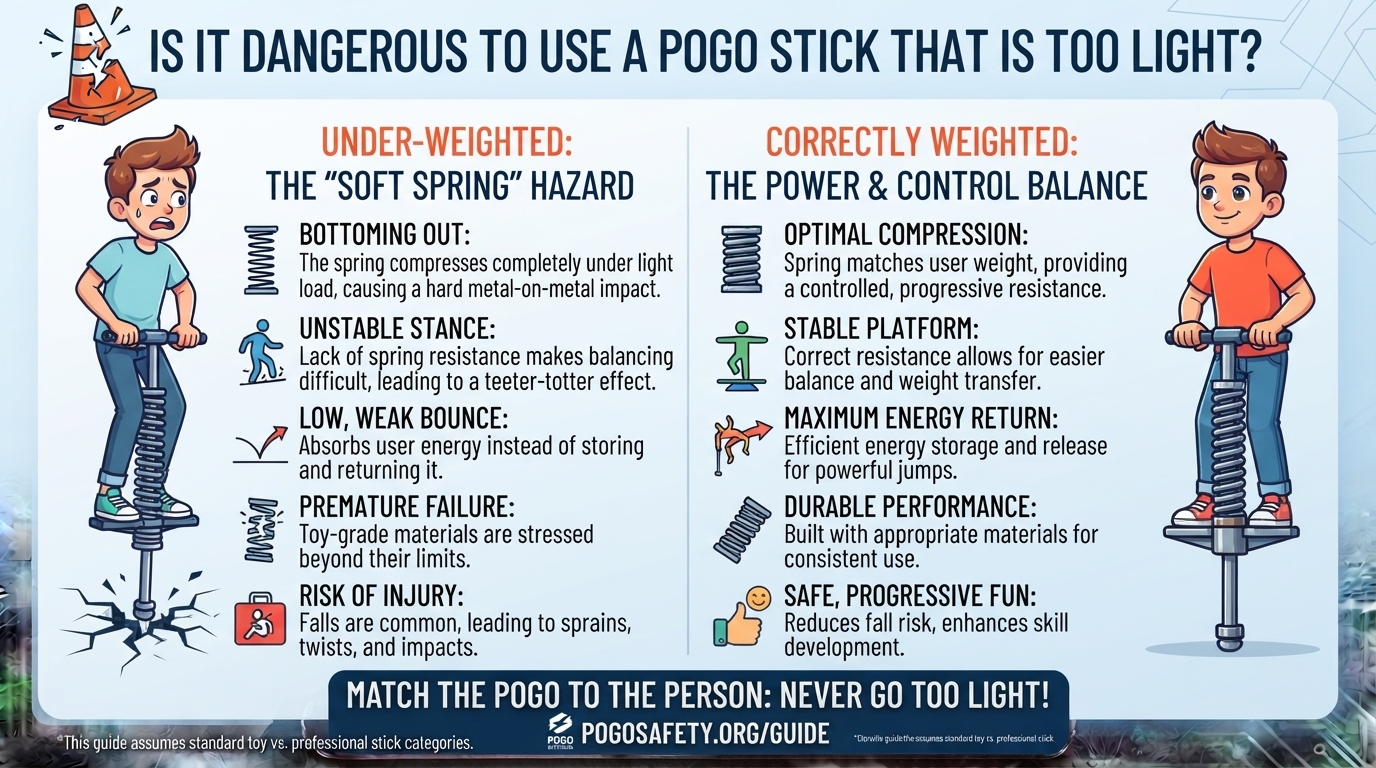
Is it dangerous to use a pogo stick that is too light?
When you are exploring the exciting world of pogo sticking—whether you are practicing in the urban landscapes of San Francisco, the parks of New York, or the backyards of Texas—choosing the right equipment is not just about fun; it is the fundamental pillar of your safety.
A common, and often dangerous, misconception is that a “lighter” or “easier” pogo stick is safer for everyone. In reality, using a pogo stick rated for a weight range significantly lower than your own is a recipe for mechanical failure and physical injury.
In this comprehensive guide, we will break down the physics behind weight capacities, the risks of “under-weighting,” and how to ensure your gear matches your physical needs.
The Physics of Weight Capacity: Why the Rating Matters
Every pogo stick is engineered with a specific internal suspension—a steel spring, an elastomer band, or an air chamber. This suspension is calculated based on a Load-to-Rebound Ratio.
1. The Risk of Structural Fatigue
When you weigh 180 lbs and use a pogo stick rated for 80–120 lbs, you are exceeding the maximum design tolerance of the materials.
- Metal Fatigue: Steel springs, when compressed beyond their limit, lose their elasticity and structural integrity. They can bend, warp, or even snap under the pressure.
- Frame Stress: The outer shell and handle structures of lightweight sticks are not designed to support the kinetic energy generated by a heavier rider. The weld points can crack, leading to sudden, catastrophic failure while in mid-air.
2. The Danger of “Bottoming Out”
The most immediate danger is “bottoming out.” This occurs when the rider’s weight fully compresses the spring until the two ends of the pogo stick frame collide.
- The Impact Shock: Instead of the spring absorbing the energy of your landing, the rigid frame does. This energy travels directly through your feet and into your ankles, knees, and spine.
- Loss of Control: When a stick bottoms out, it creates a “clunk” that throws off your balance. A rider who expects a smooth, controlled rebound instead experiences a sudden, jarring stop, which almost invariably leads to a fall.
Signs That Your Pogo Stick Is Too Light
If you are currently using a stick that you suspect is under-rated for your weight, watch for these warning signs:
- The “Clunk” Sound: If you hear a harsh metallic noise every time you land, the stick is bottoming out. This is a critical warning sign.
- Difficulty Balancing: If the stick feels “squishy” or unstable under your feet, it is likely because the spring is over-compressed and cannot provide the necessary tension for stability.
- Sluggish Rebound: A properly weighted stick should feel like an extension of your legs. If you feel like you are fighting to get the stick back off the ground, the internal mechanism is likely failing to recover because it is being pushed past its capacity.
10 Frequently Asked Questions (FAQ)
1. Does “light” just mean it’s harder to jump? No. It means the safety limits of the device are being ignored. It is an engineering issue, not a skill issue.
2. Can I gain weight and still use the same stick? Always check your current weight against the manufacturer’s range. If you have crossed the threshold, it is time to upgrade.
3. What is the safest way to determine my weight class? Weigh yourself accurately, then check the label on your pogo stick. If you are at the very top of the range, look into the next model up for better longevity.
4. Are “heavy-duty” sticks better for everyone? Not necessarily. A stick that is too stiff for a light rider will not be fun to use, as the rider won’t be able to generate enough force to compress it.
5. How do I choose between two weight ranges? If you are in between, opt for the higher range. It provides a safer, more robust platform that will last longer as you improve.
6. Is it safer to use an air-powered stick? Yes, for many people. Air-powered sticks (like the Vurtego) are adjustable. You can increase the PSI as you grow or as your skill improves, making them a much safer long-term investment.
7. Can I fix a pogo stick that has been “over-jumped”? Usually, no. If the metal has been stressed, the integrity of the unit is compromised. It is safer to replace it than to risk a snap.
8. Do I need to be a certain age to use a specific stick? Age is irrelevant. Weight is the only metric that matters for safety.
9. What should I do if my child grows out of their stick? Pass it on to a smaller child or sell it, and invest in a new stick that matches their current weight. Never “push” a light stick to its limits.
10. Where can I find weight-rated gear? Always check the manufacturer’s official specifications or trusted retailers that provide clear, category-based sizing.
Conclusion
Pogo sticking is an incredible sport for fitness and fun, but it relies entirely on the integrity of your equipment. Using a pogo stick that is too light is not just inefficient—it is a significant safety risk. The “bottoming out” effect, structural fatigue, and the high impact on your joints are factors that can turn a fun afternoon into a visit to the clinic.
Prioritize your safety by accurately knowing your weight, reading the manufacturer’s labels, and—when in doubt—choosing the stick with the higher weight capacity. With the right equipment, you can focus on mastering your skills in total confidence.