The Best High-Weight Capacity Pneumatic Pogo Sticks Compared (Ultimate guide 2026)
The Ultimate Architectural Guide: The Best High-Weight Capacity Pneumatic Pogo Sticks Compared, for decades, the pogo stick was universally categorized as a suburban children’s novelty—a light-duty, steel-coil toy that would instantly bottom out, bend, or structurally snap under the weight of an average adult. Traditional metal springs possess strict mathematical and physical limitations. To build a mechanical steel coil capable of safely launching a 200-pound adult six feet into the air, the spring itself would need to weigh more than 30 pounds, rendering the device too heavy to pull off the ground.
We curate the top pogo sticks for active families and enthusiasts in New York, California, Texas, Florida, Miami, Washington, and San Francisco. In this massive optimized guide, we compare the best high-weight capacity pneumatic pogo sticks available in 2026, focusing on performance, durability, value, and real-world usability across US markets.
Why Choose High-Weight Capacity Pneumatic Pogo Sticks?
Pneumatic systems use compressed air in a sealed cylinder instead of metal springs. This delivers several advantages:
- Infinite tunability: Adjust PSI to match any rider weight and desired bounce height.
- Superior high-weight performance: One stick serves light and heavy users alike.
- Higher jumps: Up to 10+ feet with proper technique.
- Smoother ride: Less jarring than stiff springs.
- Longevity: Fewer fatigue failures compared to metal springs.
Ideal For:
- Heavier adults (200–400 lbs) in Texas or Florida suburbs.
- Fitness enthusiasts in New York apartments seeking low-impact cardio.
- Extreme riders in California skateparks chasing records.
- Growing families who want one stick for everyone.
The invention of pneumatic (air-powered) propulsion technology completely rewrote the physics of extreme sports. By replacing heavy, unyielding steel coils with high-compression air cylinders, engineers eliminated the structural “weight ceiling” of the pogo stick. Should you wear a helmet on a pogo stick?
TRADITIONAL COIL SPRING                        PNEUMATIC AIR SPRING
[Body Weight]                                  [Body Weight]
      │                                              │
      ▼                                              ▼
 🪱🪱🪱🪱🪱  Mechanical Fatigue                    ┌──────┐
 🪱🪱🪱🪱🪱  Strict Structural Limit              │ 💨💨 │ Infinite Calibration
 🪱🪱🪱🪱🪱  Bottoms Out Completely               │ 💨💨 │ via PSI Adjustments
 └────┴──────────────────────┘                  └────┴─────────────────────┘
Welcome to the definitive guide for bestpogostick.com. If you are a heavy rider, an extreme athlete, or a fitness enthusiast operating in premier US metropolitan markets—from the concrete plazas of New York and San Francisco to the expansive driveways of Texas and Florida—finding a high-weight capacity stick requires moving past toys and entering the realm of pneumatic elite engineering.
This deep-dive technical blueprint and comparison review breaks down the market’s leading high-weight pneumatic pogo sticks, the underlying physics of compressed air springs, regional urban riding conditions, and how to configure your setup for maximum vertical thrust.
1. Core Physics: How Pneumatic Air Springs Defy Weight Limits
To understand why pneumatic pogo sticks excel at high weight capacities, we must look at fluid mechanics and gas laws. Traditional springs operate on Hooke’s Law, which states that the force ($F$) needed to extend or compress a spring by some distance ($x$) scales linearly with that distance:
$$F = kx$$
Where $k$ is the constant factor characteristic of the spring. Once an adult’s static mass plus their dynamic landing force exceeds that fixed capacity, the spring hits its absolute mechanical limit.
Pneumatic sticks operate instead under Boyle’s Law, which governs ideal gases under compression:
$$P_1V_1 = P_2V_2$$
When you jump onto a pneumatic pogo stick, the solid metal piston slides upward into a sealed, aircraft-grade aluminum cylinder. This action dramatically reduces the internal volume ($V$), causing the internal air pressure ($P$) to scale exponentially.
Why Air Has No Maximum Weight Limit – The Best High-Weight Capacity Pneumatic Pogo Sticks Compared
- Variable Baseline Density: By using a standard high-pressure bicycle floor pump or shock pump, you can manually inject more air molecules into the cylinder through a Schrader valve. This raises the baseline pounds per square inch (PSI).
- Dynamic Stiffening: Higher baseline pressure makes the air spring stiffer. A single pneumatic pogo stick can be set to 35 PSI to accommodate a 75-pound teenager, then pumped up to 75 PSI to provide a stiff, highly responsive cushion for a 280-pound adult.
- Massive Structural Burst Capacity: High-end pneumatic cylinders are engineered to handle incredible pressure. For example, top-tier cylinders possess a structural burst capacity exceeding 2,000 PSI. Because it is physically impossible for a human being to generate that level of internal pressure through kinetic jumping, the device features an effective maximum weight limit that is virtually limitless.
2. The High-Weight Pneumatic Big Three: Deep Technical Reviews
The global market for true extreme, adult-grade pneumatic pogo sticks is elite and highly specialized. Three main models stand out for high-weight capacity performance. Are foam pogo jumpers safe for toddlers and indoor hardwood floors?
Model 1: The Vurtego V4
The Vurtego V4 is widely considered the gold standard of all-around pneumatic pogo sticks. It is designed to mimic the feeling of a portable trampoline, offering a smooth, progressive deceleration and an incredibly soft, elastic rebound.
Engineering Architecture & Materials
The outer cylinder of the V4 is cross-engineered from 6061-T6 aircraft-grade aluminum, which is precision-extruded and clear-anodized to shield it against oxidation and abrasive grit. The interior piston features a low-friction, high-tensile composite matrix that glides smoothly against the inner cylinder walls.
Weight Capacity & Calibration Specifications
- Minimum Rider Weight: 75 lbs ($34\text{ kg}$)
- Maximum Rider Weight: No Upper Limit (Tested up to 400 lbs safely)
- Vertical Height Potential: 2 to 8 feet ($0.6\text{ to }2.4\text{ meters}$)
- Internal Air Volume: Features a large-bore cylinder design that holds an additional 14 cubic inches of air volume compared to older generations, lowering the compression ratio to provide a remarkably plush, joint-friendly ride.
Real-World Riding Performance
The V4 excels at transitioning between high-intensity cardio fitness and big-air recreational riding. At lower pressures, it delivers a fast, low-amplitude bounce ideal for burning calories and engaging core stabilization muscles. When pressurized to match heavy riders, it handles high-velocity landings smoothly, absorbing shock without transferring jarring vibrations into the knees.
Model 2: The Vurtego V4 Pro
If the standard V4 is a high-performance sports car, the V4 Pro is an unregulated track machine. This model is engineered specifically for extreme stunt riders and competitive Xpogo athletes who want to push past architectural limits and clear structural obstacles.
Engineering Architecture & Materials
The Pro uses the same high-tensile 6061-T6 aluminum body as the standard V4, but modifies the internal piston and cylinder interface. The key enhancement is an ultra-low-friction bushing system featuring a surface area reduced by approximately 78%. Additionally, the bushing features integrated, micro-drilled lubrication pockets designed to store and slowly release lubricant across the piston during active use.
Weight Capacity & Calibration Specifications
- Minimum Rider Weight: 75 lbs ($34\text{ kg}$)
- Maximum Rider Weight: No Upper Limit
- Stroke Length: Features a slide-shaft stroke that is 2 inches longer than the standard V4.
- Vertical Height Potential: 4 to 11+ feet ($1.2\text{ to }3.4\text{ meters}$) (Currently holds multiple Guinness World Records for height)
Real-World Riding Performance
The V4 Pro requires excellent physical fitness and riding technique. The extra 2 inches of stroke length mean the rider can compress the stick deeper, storing a massive amount of kinetic energy that launches them much higher into the air.
On landing, this extended stroke provides a longer deceleration window, which is essential for safely absorbing high-impact drops from roofs, walls, or ledges. However, this model is less suited for casual fitness training due to its longer footprint and faster acceleration.
Model 3: The TK8 Big Air / Air Pro
Hailing from Europe and widely imported into premium US action-sports centers, the TK8 series offers a distinct take on pneumatic engineering, prioritizing rapid lateral movement and quick-succession tricks.
Engineering Architecture & Materials
The TK8 utilizes a specialized machined aluminum leg with precision-cut exterior longitudinal grooves. This unique channel system allows air to flow along the exterior tracks of the lower leg, eliminating the need for breathing ports in the main body. This enclosed design keeps street dirt, sand, and moisture from entering the main chamber.
Weight Capacity & Calibration Specifications
- Minimum Rider Weight: 121 lbs ($55\text{ kg}$)
- Maximum Rider Weight: 264 lbs ($120\text{ kg}$)
- Operating Pressure Range: 3.0 to 7.0 Bar ($43.5\text{ to }101.5\text{ PSI}$)
- Vertical Height Potential: 6 to 8.5 feet ($1.8\text{ to }2.6\text{ meters}$)
Real-World Riding Performance
The TK8 feels noticeably lighter and more agile in mid-air than the Vurtego lineup, making it a favorite for rapid, technical execution like bar-spins, frame-grabs, and tail-whips.
However, unlike the Vurtego models, it has a hard mechanical weight limit at 264 pounds. Riders approaching this weight limit will find that the smaller air volume inside the TK8 requires running very high pressure (close to 7 Bar), which can make the rebound feel stiff and snappy rather than smooth.
3. Side-by-Side Architectural Comparison Matrix
To help you choose the right model on bestpogostick.com, this matrix highlights the key specifications across all major high-weight pneumatic pogo sticks:
| Feature / Specification | Vurtego V4 | Vurtego V4 Pro | TK8 Air Pro |
| Country of Origin | United States | United States | France |
| Chassis Material | 6061-T6 Aluminum | 6061-T6 Aluminum | Aerospace Aluminum Alloy |
| Max Weight Capacity | Unlimited (Tested to 400+ lbs) | Unlimited (Tested to 400+ lbs) | 264 lbs ($120\text{ kg}$) |
| Min Weight Requirement | 75 lbs ($34\text{ kg}$) | 75 lbs ($34\text{ kg}$) | 121 lbs ($55\text{ kg}$) |
| Stroke Capacity | Standard | Extended (+2 inches) | Moderate / Stiff |
| Lubrication System | Manual Shaft Wipe | Internal Self-Lubricating Bushing | Sealed Grooved Track |
| Bushing Surface Area | 100% Standard Baseline | Reduced by 78% for Speed | High-Performance Polymer |
| Primary Use-Case | Fitness, Cardio, All-Around Play | Extreme Stunts, World Records | Rapid Technical Trick Sequences |
4. Sizing Framework for Tall and Heavy Riders
When purchasing an extreme pneumatic pogo stick, choosing the correct size is just as important as matching your weight. Unlike spring sticks, which vary based on age, pneumatic adult sticks are sized directly to the rider’s height to ensure correct biomechanical alignment of your shoulders, core, and elbows over the handlebars.
       [ CORRECT ADJUSTMENT ]                      [ INCORRECT ADJUSTMENT ]

         O   Handlebars at sternum                   O   Handlebars too low
        /│\  Slight elbow bend                      /│\  Hunched back / spine strain
        ─┴─  Straight spine                          │   Weight shifted forward too far
         │                                          ─┴─
         │   Optimal center of mass                  │   Extreme risk of tipping
         █   over structural cylinder                █   over handlebars
If you select a frame that is too short, your upper body will hunch forward, shifting your center of mass past the vertical axis of the cylinder. This incorrect position causes the stick to kick backward during compression, increasing the risk of falling over the handlebars.
The Vurtego platform scales across three precise sizes to maintain proper posture:
1. Small Frame Edition
- Rider Height Range: 4’8″ to 5’3″ ($142\text{ to }161\text{ cm}$)
- Static Tool Weight: 10 lbs ($4.54\text{ kg}$)
- Biomechanical Profile: Keeps the footpeg-to-handlebar distance short, allowing shorter adults or teenagers to maintain a clean 90-degree arm bend during compression.
2. Medium Frame Edition
- Rider Height Range: 5’4″ to 5’11” ($162\text{ to }181\text{ cm}$)
- Static Tool Weight: 10.5 lbs ($4.76\text{ kg}$)
- Biomechanical Profile: The most versatile chassis configuration. It fits the average height profile of adult athletes, placing the top T-bar handle exactly at the sternum when standing flat on the pegs.
3. Large Frame Edition
- Rider Height Range: 6’0″ to 6’6″+ ($182\text{ to }198\text{ cm}$)
- Static Tool Weight: 11 lbs ($5.00\text{ kg}$)
- Biomechanical Profile: Features an extended upper frame housing. This extra length prevents tall, heavy riders from over-extending their lower backs, keeping their spine aligned vertically over the center of the piston.
5. Regional Urban Riding Guide: Top US Markets
Pneumatic pogo sticks absorb and discharge huge amounts of energy. The type of ground you ride on changes how the rubber tip grabs the pavement and how well the stick bounces. Here is what riders need to know across major US metro regions:
New York (NYC, Brooklyn Commons, Long Island)
- The Urban Terrain: Primarily aged concrete slabs, plazas, and asphalt park paths.
- Environmental Challenges: Frost heaves create uneven lips between sidewalk expansion joints, while winter salt and urban grit can collect on the ground.
- Safety Strategy: Avoid deep concrete cracks. If a pneumatic tip strikes a 1-inch ridge mid-bounce, the sudden stop will send the rider forward. Always sweep your riding footprint clean of loose sand or debris to prevent the rubber tip from sliding sideways.
California (Los Angeles, San Francisco, San Diego)
- The Urban Terrain: Smooth beach boardwalks, expansive concrete plazas, and hilly public zones.
- Environmental Challenges: Severe coastal slopes and morning marine layer condensation can leave a slick film on surfaces.
- Safety Strategy: Strictly avoid slopes. In hilly cities like San Francisco, a pneumatic pogo stick should only be ridden on completely flat, level plazas (like Embarcadero). Moisture from coastal fog can cause rubber tips to slip on concrete; always wait until the sun dries the surface before jumping.
Texas (Houston, Austin, Dallas-Fort Worth)
- The Urban Terrain: Coarse aggregate suburban driveways, unjoined concrete warehouse slabs, and asphalt.
- Environmental Challenges: Extreme summer heat can soften asphalt, and limestone dust can collect on surfaces.
- Safety Strategy: During peak summer heat, hot asphalt softens and acts like a dampening cushion, absorbing your energy and reducing your bounce height. Heavy riders should stick to thick, fully cured concrete driveways or warehouse pads to ensure a crisp, powerful rebound.
Florida (Miami, Orlando, Tampa Coastline)
- The Urban Terrain: Paved park loops, flat driveway setups, and brick paver walkways.
- Environmental Challenges: Fine quartz sand blowing from nearby beaches, sudden tropical downpours, and slick decorative tiles.
- Safety Strategy: Fine coastal sand is highly abrasive. If sand gets stuck to the piston shaft, it can easily slide past the seals and scratch the inner aluminum cylinder, leading to air leaks. Keep your stick out of the sand, and avoid glossy decorative stone or brick paver paths when wet.
6. Comprehensive Calibration & PSI Tuning Manual
The single biggest mistake new pneumatic riders make is miscalculating their operating pressure. If your pressure is off, the stick will either feel like a stiff steel pipe or bottom out immediately. Follow this step-by-step calibration guide to get the perfect setup:
Essential Gear Checklist
- The Pump: You need a high-pressure bicycle floor pump or a dedicated mountain bike shock pump rated up to at least 150 PSI. Low-pressure car tire inflators or gas station pumps cannot reliably overcome the pressure within a pogo cylinder.
- The Gauge: Use an inline mechanical or digital pressure gauge to verify your settings before jumping.
Step-by-Step Pressure Configuration Procedure
1.Rest and Stabilize the Chassis:No Weight Applied.
Place the pogo stick vertically on a level surface. Ensure zero weight or pressure is applied to the footpegs or handlebars so the inner piston is fully extended.
2.Access the Schrader Valve Assembly:Top Cap Removal.
Unscrew the protective polymer cap located at the top center of the T-bar handlebar to expose the heavy-duty brass Schrader valve.
3.Calculate Your Target Baseline PSI:Weight-to-Pressure Formula.
Use the foundational pneumatic scaling formula to establish your starting baseline pressure:
$$\text{Target Baseline PSI} = \left(\frac{\text{Rider Weight in lbs}}{4}\right) + 15$$
Example: A 200-pound rider calculates: $\frac{200}{4} + 15 = 65\text{ PSI}$.
4.Inflate and Check the Pressure:Engage the Pump.
Securely attach the pump chuck to the valve. Pump evenly until the inline gauge matches your calculated target baseline PSI. Detach the chuck cleanly to prevent air loss.
5.Perform the 5-Bounce Compression Test:Field Evaluation.
Put on your full safety gear, mount the stick, and perform 5 clean vertical hops. Note how the spring feels:
- Bottoming Out: If you feel a hard mechanical thud at the bottom of your bounce, the pressure is too low. Stop immediately and add 5 PSI.
- Zero Deflection: If the piston barely moves and your joints feel a harsh impact, the pressure is too high. Release 5 PSI using the pump’s bleed valve.
7. Advanced Safety Protocols for Heavy Riders
Jumping on a pneumatic pogo stick is an intense, high-impact sport. When a 220-pound rider clears five feet vertically, they generate massive kinetic energy on descent. Proper safety gear and technique are essential to keep your sessions safe and fun.
       [ THE ADULT SAFETY SUITE ]

       ├── Helmet: Dual-Certified (CPSC 1203 + ASTM F1492 Heavy Shell)
       ├── Wrists: Molded Splint Braces (Absorbs horizontal slide forces)
       ├── Knees:  Ballistic Nylon Hard-Caps (Disperses downward deceleration)
       └── Shoes:  Flat Vulcanized Rubber Soles (Prevents ankle roll on pegs)
Head Protection: Dual-Certified Skate/Acrobatic Helmets
Standard aerodynamic bicycle helmets are designed to protect against forward-rolling falls on a bike. They leave the lower base of the skull exposed. For high-air pneumatic pogo riding, you need a dual-certified action-sports helmet (CPSC 1203 and ASTM F1492). These feature a deep-drop rear profile that protects the back of your head if the pogo stick slides out from under you forward.
Upper Extremity Bracing: Hard-Splint Wrist Guards
When you lose balance on a high bounce, your natural instinct is to reach out and break your fall. Landing on bare concrete can easily fracture or sprain a wrist. Heavy-duty inline skating wrist guards feature stiff nylon splints that shield your palms and support the wrist joint, allowing you to slide safely across the ground on impact.
Lower Extremity Armor: Hard-Shell Knee and Elbow Pads
Avoid slim, slip-on elastic knee sleeves. Instead, choose heavy-duty ballistic nylon pads with molded plastic outer caps. These hard plastic shells are designed to slide along pavement when you land, transforming vertical impact forces into safe, controlled horizontal movement.
Structural Footwear Selection
Never ride a high-capacity pogo stick in running shoes that have thick foam midsoles or exposed air pockets. Under high downward forces, these soft foam layers can easily flex or compress unevenly, causing your ankle to roll off the footpegs. Stick to flat-soled skate shoes or classic court sneakers with vulcanized rubber outsoles, which keep your feet stable and firmly planted on the pegs.
8. Proactive Mechanical Maintenance for Air-Spring Systems
To keep your pneumatic pogo stick performing flawlessly and prevent sudden air loss, follow this regular maintenance checklist:
1. Piston Shaft Cleansing and Debris Removal
- Frequency: After every 3 to 4 hours of active riding.
- Procedure: Extend the piston shaft fully. Use a clean, dry microfiber towel to wipe away any accumulated dust, road grime, or moisture from the shaft surface.
- Warning: Never use harsh oil-based solvents like WD-40 on the shaft. These solvents will quickly break down the internal rubber pressure seals, causing the cylinder to leak air.
2. Internal Lubrication Maintenance
- Frequency: Once a month, or whenever you notice a slight sticking feeling or squeaking during a bounce.
- Procedure: For standard V4 units, apply 3 to 4 drops of high-grade pure dry silicone spray or white lithium fluid directly onto the extended piston shaft, then bounce a few times to spread the lubricant across the internal seals. For V4 Pro models, unscrew the integrated lubrication port plugs and inject lubricant directly into the self-lubricating bushing reservoirs.
3. Footpeg Grip-Tape Replacement
- Frequency: Every six months, or whenever the textured surface looks worn down.
- Procedure: Heavy riders apply immense twisting forces to the footpegs when executing turns or stabilizing in mid-air. If the grip tape loses its texture, your boots can easily slip off during a high jump. Peel off the worn tape, clean the metal plate with isopropyl alcohol, and apply a fresh sheet of heavy-duty, coarse skateboard grip tape.
9. Frequently Asked Questions (FAQ)
Can a pneumatic pogo stick pop or explode from a heavy landing?
No. High-capacity pneumatic cylinders are made from thick, aircraft-grade extruded aluminum designed to withstand pressures over 2,000 PSI. Even if a 300-pound rider drops from a 10-foot ledge and bottoms out the piston completely, the internal pressure will top out well below the cylinder’s physical burst limit. The stick will not explode; at worst, it will simply hit its mechanical rubber bump stop.
Why does my pneumatic pogo stick lose a few PSI over a week of storage?
Just like mountain bike shocks and high-pressure tires, pneumatic pogo cylinders experience tiny amounts of natural air migration over time. Changes in room temperature also cause air molecules to expand or contract. Always check and adjust your cylinder’s PSI with a floor pump before every riding session.
Can I practice jumping with a pneumatic pogo stick indoors on carpet?
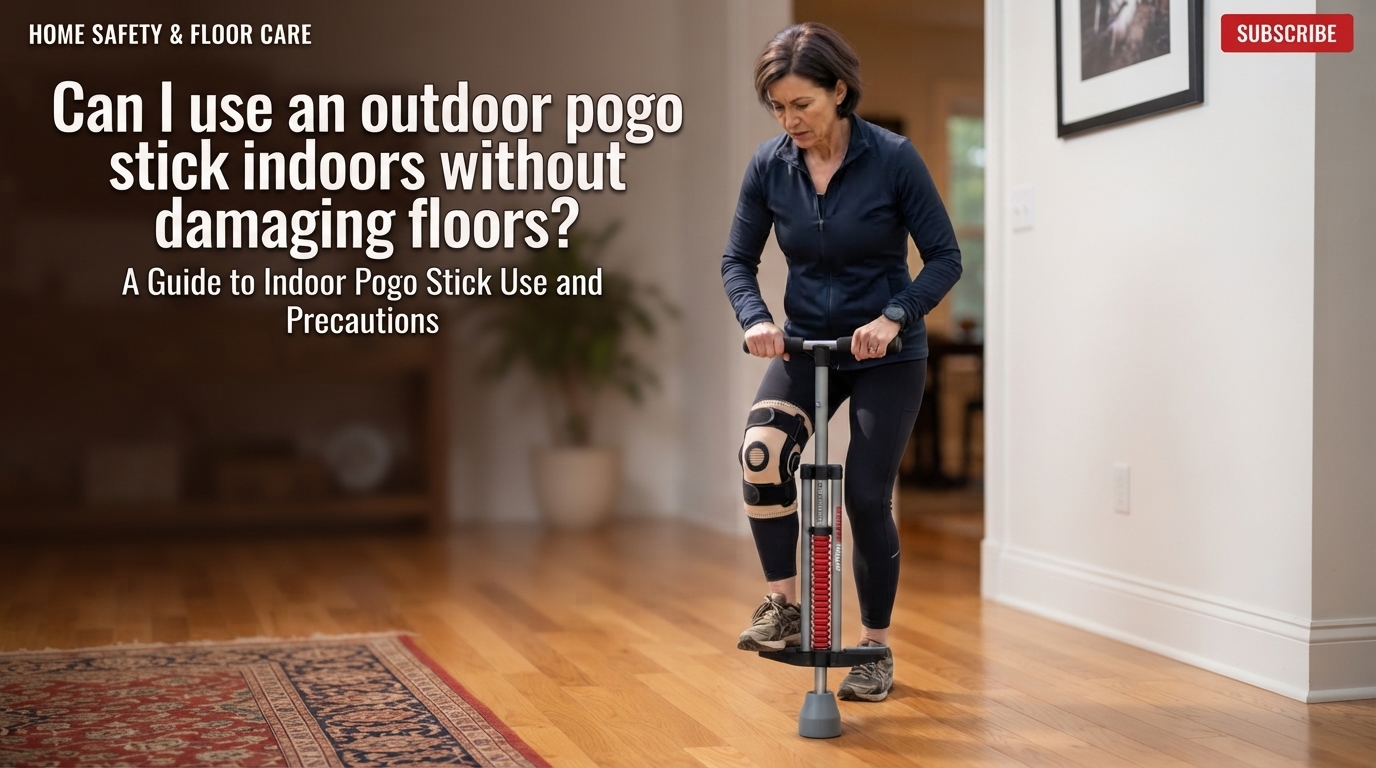
Absolutely not. Pneumatic pogo sticks generate massive downward force focused through a single small rubber tip. If you jump on carpet or hardwood floors, you can easily crack the subfloor tiles, punch holes through wooden panels, or ruin your carpets. Only ride your pneumatic stick outdoors on thick, solid concrete pads, clean asphalt, or designated skate park plazas.
What should I do if the pogo stick starts to stick mid-bounce?
A sticking motion usually means dirt or grit has worked its way past the main wiper seal, or the internal cylinder needs lubrication. Wipe down the outer piston shaft thoroughly with a clean microfiber cloth, apply a few drops of pure dry silicone spray, and compress the stick a few times. If the sticking persists, you may need to open the top cap to clean and re-grease the internal cylinder walls.
Final Buyer’s Summary Checklist
Before choosing your next extreme setup on bestpogostick.com, run through this quick breakdown to find your perfect pneumatic match:
- Choose the Vurtego V4 if: You want an incredible, high-intensity cardio fitness tool that doubles as a smooth, high-flying recreational stick with zero weight limits.
- Choose the Vurtego V4 Pro if: You are an experienced extreme athlete looking to clear massive obstacles, break records, and maximize your vertical air time.
- Choose the TK8 Air Pro if: You weigh under 264 pounds and want a light, agile, highly responsive stick for technical mid-air tricks and fast-paced skatepark riding.