Why does my high-performance air pogo stick need to be lubricated so much more often than a spring stick?
If you have upgraded from a classic steel spring pogo stick to an extreme air-powered pogo stick (like a Vurtego, Flybar 800, or custom pneumatic system), you have likely noticed a major maintenance difference: air pogo sticks require far more frequent lubrication.
Where a traditional spring stick can sit in a garage for years without maintenance and still jump, a pneumatic air pogo stick can lose air pressure, feel sticky, or suffer blown internal seals if neglected for even a few weeks of heavy riding.
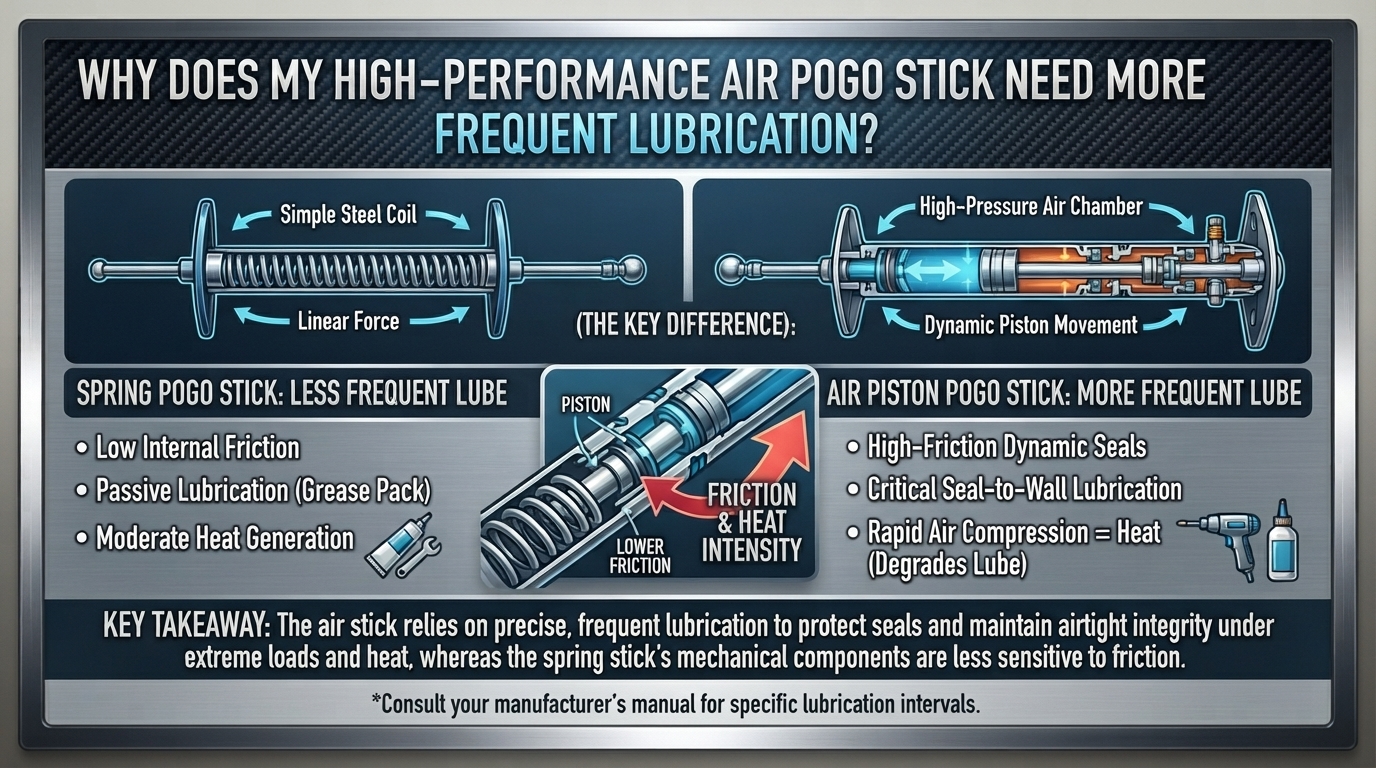
The short answer comes down to physics and mechanical engineering: a spring pogo stick uses metal tension to bounce, while an air pogo stick operates as a high-pressure pneumatic cylinder. Maintaining an airtight seal under extreme pressure and high friction demands continuous lubrication.
Direct Comparison: Air Pogo Stick vs. Traditional Spring Stick
| Engineering Metric | Traditional Steel Spring Stick | High-Performance Air Pogo Stick |
| Primary Energy Source | Mechanical steel coil compression | Compressed air (Pneumatic chamber) |
| Operating Internal Pressure | Ambient atmospheric pressure | 30 to 100+ PSI (Pounds per Square Inch) |
| Max Jump Height | 1 to 2 feet (0.3 to 0.6 m) | 8 to 10+ feet (2.4 to 3+ m) |
| Primary Lubrication Purpose | Squeak reduction & rust prevention | Hermetic pressure seal & dynamic friction control |
| Recommended Maintenance Interval | Once or twice a year (or when it squeaks) | Every 3 to 5 riding sessions (or every 2–4 weeks) |
| Critical Component Failure | Rust build-up / spring metal fatigue | Dry wiper seal blow-out / pressure leaks |
| Sensitivity to Dust & Dirt | Low (open tolerance) | Extremely High (micro-tolerances inside cylinder) |
The Core Physics: Why Pneumatic Air Sticks Demand Constant Oil
1. The Role of Lubricant: Friction Reduction vs. Pressure Sealing
On a traditional steel spring pogo stick, the lubricant simply reduces metal-on-metal friction where the inner shaft slides through the outer plastic sleeve. If it dries out, the stick gets noisy or stiff, but it still functions safely.
On an air-powered pogo stick, the lubricant plays two distinct roles:
- Friction Reduction: Mitigating heat and drag as the main piston sweeps inside the aluminum barrel.
- Dynamic Hydraulic/Pneumatic Sealing: The fluid creates an impenetrable fluid barrier between the dynamic rubber/polyurethane O-rings and the inner cylinder walls.
Without a steady film of specialized silicone or fluid lubricant, high-pressure air (often pressurized up to 100 PSI) micro-escapes past the rubber wiper seals with every stroke.
2. Micro-Blowing and “Blow-By” Under Dynamic Load
When an extreme pogo athlete launches 8 feet into the air, landing creates rapid compression. Air inside the chamber heats up instantly (adiabatic compression).
If the seal lacks sufficient lubricant film:
- Dry rubber friction increases, generating excess surface heat.
- Heat causes the elastomer O-rings to expand unevenly, distort, or crack.
- High pressure forces air past the microscopic gaps—a phenomenon known as pneumatic blow-by.
Regular lubrication coats the seals, preventing dry friction and filling micro-fissures in the rubber to ensure 100% air retention upon landing impact.
3. Dust Scavenging and the “Wiper Ring” Effect
Extreme pogo riding takes place on concrete, asphalt, skate parks, and dirt tracks across regions with varying climates—from dry, dusty conditions in Texas and Southern California to damp, gritty street environments in New York, Washington, and San Francisco.
Every time the main shaft extends out of the body, it collects microscopic dust, road grit, and silica particles. As the shaft retracts back into the main cylinder during compression:
- The external wiper seal scrapes off large debris.
- Microscopic dust works its way past dry wiper seals into the main chamber.
- Without liquid lubricant to trap these abrasives, dust acts like liquid sandpaper, scoring internal aluminum walls and destroying airtight seals.
Frequent fresh lubrication flushes out contaminated oil and traps particulates before they cause mechanical damage.
Regional Climate Impacts on Air Pogo Maintenance
Where you live directly affects how quickly your air pogo stick consumes lubricant and degrades seals:
- Texas (Austin, Houston, Dallas) & Inland Southern California: High ambient temperatures (above 90°F / 32°C) cause oils to thin out rapidly. Dry airborne dust acts as an abrasive paste. Maintenance Rule: Re-lubricate every 2 to 3 sessions; check pressure before every ride.
- San Francisco Bay Area & Coastal California: High marine humidity, coastal salt fog, and damp ocean air accelerate corrosion on unprotected metal parts. Maintenance Rule: Apply silicone lubricant liberally after coastal outdoor sessions to repel ambient moisture.
- Washington State (Seattle, Tacoma): Persistent drizzle and wet street grit wash away thin surface lubricants quickly. Maintenance Rule: Clean the lower shaft after wet rides and apply synthetic fluid to prevent moisture from pulling grit into the main wiper seal.
- New York (NYC Metro & Upstate): Freezing winter temperatures stiffen rubber O-rings, making them brittle and prone to micro-cracking if dry. Maintenance Rule: Store indoors in temperature-controlled spaces and lubricate before winter indoor/outdoor riding.
How to Properly Lubricate an Air Pogo Stick: Step-by-Step
Using the correct lubricant and procedure ensures maximum air retention, smooth travel, and long seal life.
Recommended Lubricants vs. Products to Avoid
Warning: NEVER use petroleum-based spray lubricants like standard WD-40, automotive engine oil, or heavy lithium grease on air pogo sticks. Petroleum solvents attack and dissolve rubber O-rings, causing them to swell, crack, and fail completely.
- RECOMMENDED: 100% Pure Silicone Oil (30–50 wt), specialized pneumatic tool oil, or manufacturer-recommended air-shock fluids (e.g., Fox/RockShox suspension fluid).
- AVOID: Standard WD-40 Multi-Use, 3-In-One oil, automotive brake fluid, vegetable oil, or heavy axle grease.
Step-by-Step Service Procedure
1.Depressurize and Clean:2 minutes.
Release internal air pressure using the Schrader valve. Thoroughly wipe down the outer slider shaft using a lint-free microfiber cloth to remove all surface dust and grit.
2.Apply Lubricant:2 minutes.
Apply 5 to 10 drops of 100% silicone fluid directly onto the main slider shaft just above the main cylinder seal, or inject via the designated lubrication port according to manufacturer instructions.
3.Distribute the Oil:1 minute.
Pump the shaft up and down manually through its full stroke range 10 to 15 times to distribute oil evenly across internal O-rings and shaft walls.
4.Repressurize & Inspect:2 minutes.
Re-inflate the main chamber to your target PSI using a high-pressure shock pump. Wipe away any excess oil pushed out by the wiper seal to prevent dirt accumulation.
Troubleshooting Common Maintenance Issues
1. Rapid Air Loss (Dropping 20+ PSI Overnight)
- Cause: Dry or cracked main seal, or a loose valve core.
- Fix: Apply 10 drops of high-viscosity silicone fluid into the air chamber via the Schrader valve (valve core removed), re-inflate, and cycle the stick. If air loss continues, replace the internal O-ring kit.
2. “Stiction” or Jerky Shaft Movement
- Cause: Complete lack of lubrication causing rubber-to-metal binding, or dirt caught under the wiper seal.
- Fix: Clean shaft thoroughly with isopropyl alcohol, re-apply pure silicone fluid, and work the mechanism through its travel range until movement is smooth.
Frequently Asked Questions (FAQ)
1. How often should I lubricate my air pogo stick?
For active riders jumping 2 to 3 times a week, apply 3 to 5 drops of pure silicone fluid every 3 to 5 riding sessions or every 2 weeks. If riding in dusty or damp conditions, lubricate more frequently.
2. Can I use standard WD-40 on my pneumatic pogo stick?
No. Standard WD-40 is a solvent and light petroleum distillate, not a dedicated lubricant. It strips internal shock oil, breaks down rubber seals, and degrades pneumatic sealing performance over time.
3. What pressure (PSI) should I run in my air pogo stick?
Target PSI depends on rider weight and jump style. Most high-performance air sticks run between 30 PSI and 100+ PSI. Always consult manufacturer specifications and adjust pressure incrementally using a high-pressure bike shock pump (not a standard car tire pump).
4. Why does my air pogo stick lose pressure when stored unused?
Pneumatic seals rely on dynamic movement and fluid lubrication to maintain a complete air seal. When left stationary for months, oil drains off upper seals, causing rubber to dry out slightly and allow micro-leaks around the valve stem or main chamber.
5. Can I convert a spring pogo stick to an air system?
No. Mechanical spring pogo sticks lack the thick-walled aluminum construction, precision-machined internal tolerances, dynamic O-ring grooves, and pressure-rated Schrader valves necessary to hold compressed air safely.
6. What is the difference between a high-pressure shock pump and a standard bike pump?
High-pressure shock pumps deliver small volumes of air at high pressures (up to 300+ PSI) with a non-leak valve connection. Standard tire pumps move large volumes of air at low pressures (under 50 PSI) and release a burst of air upon disconnection, making precise pressure tuning difficult.
7. What are the signs that my internal seals need full replacement rather than just oil?
If your pogo stick loses significant air pressure within minutes despite fresh lubrication, if deep score marks appear on the main slider shaft, or if black degraded rubber particles leak out with oil, it is time to install a fresh seal rebuild kit.
8. Is an air pogo stick safe to use in cold winter temperatures?
Yes, but cold weather drops internal air pressure and causes rubber seals to stiffen. Adjust pressure indoors, store the stick in a warm area prior to use, and inspect seals for flexibility before riding below 40°F (4°C).
9. Why is silicone oil preferred over petroleum oil for pneumatic shocks?
Silicone oil offers excellent thermal stability, does not degrade rubber or polyurethane elastomers, and maintains stable viscosity across wide temperature ranges. Petroleum oils dissolve synthetic rubber seals over time.
10. How long do seals last on high-performance air pogo sticks with proper maintenance?
With regular lubrication, clean storage, and prompt removal of grit from the main shaft, high-performance pneumatic seals typically last 1 to 3 years of active riding before requiring a seal kit replacement.
Conclusion
The higher maintenance requirement of an air pogo stick is the trade-off for its performance capabilities. A traditional spring stick relies on heavy steel coils that offer limited bounce heights and basic durability. An air pogo stick functions as a precision-engineered pneumatic machine capable of launching riders over 8 feet in the air.
By establishing a quick maintenance routine—wiping the slider shaft clean, applying 100% silicone oil every few rides, and maintaining proper internal PSI—you can keep your pneumatic seals airtight and enjoy smooth, high-flying performance for years.